Like A Virgin

Buying A Home Can Be Scary... Until You Know the FACTS! [INFOGRAPHIC] | Keeping Current Matters

Some Highlights From Keeping Current Matters

  • 36% of Americans think they need a 20% down payment to buy a home. 44% of Millennials who purchased a home this year have put down less than 10%.
  • 71% of loan applications were approved last month
  • The average credit score of approved loans was 723 in September (the lowest recorded score since Ellie Mae began tracking in August 2011).

Grow Your Family’s Wealth as Home Equity Builds

A great blog post from Keeping Current Matters!

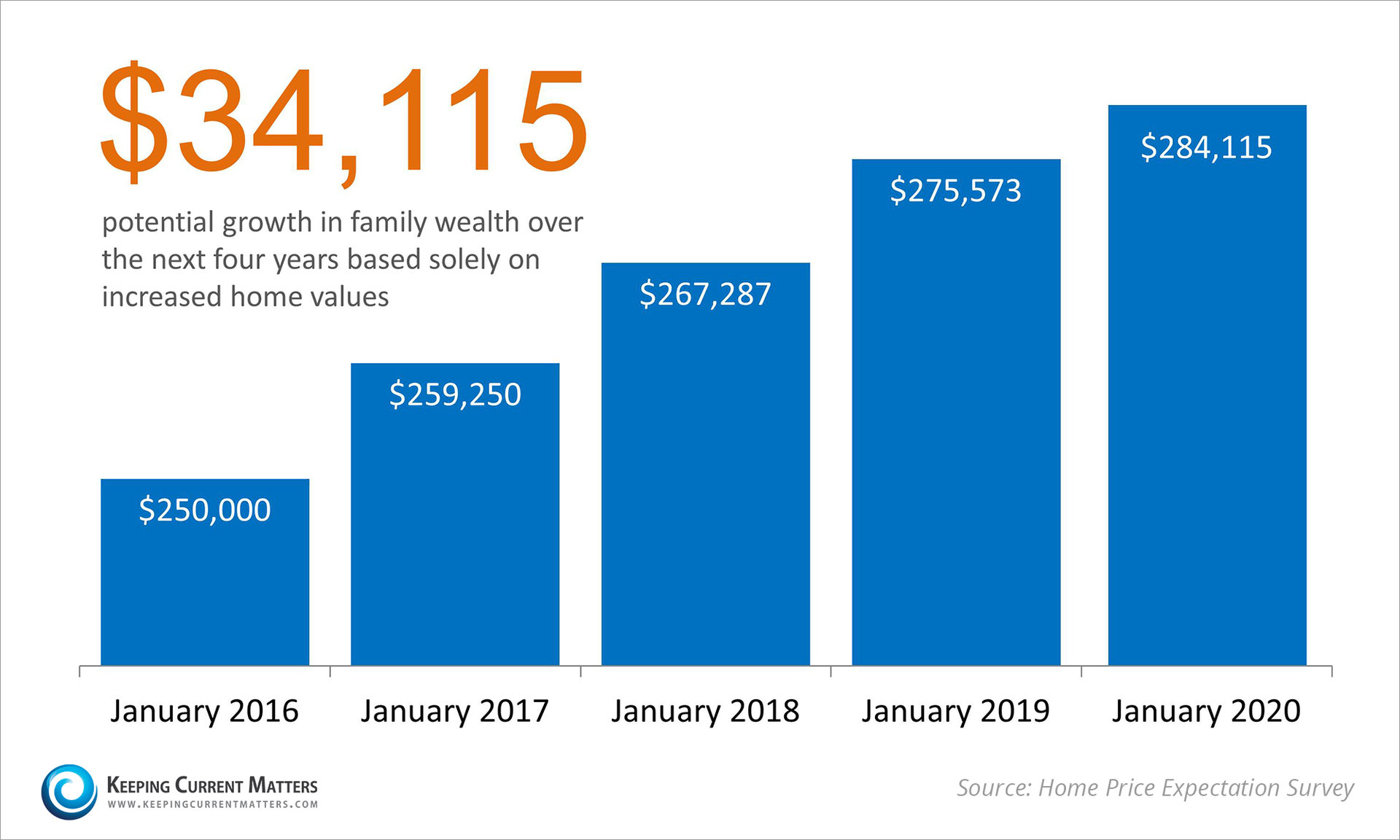
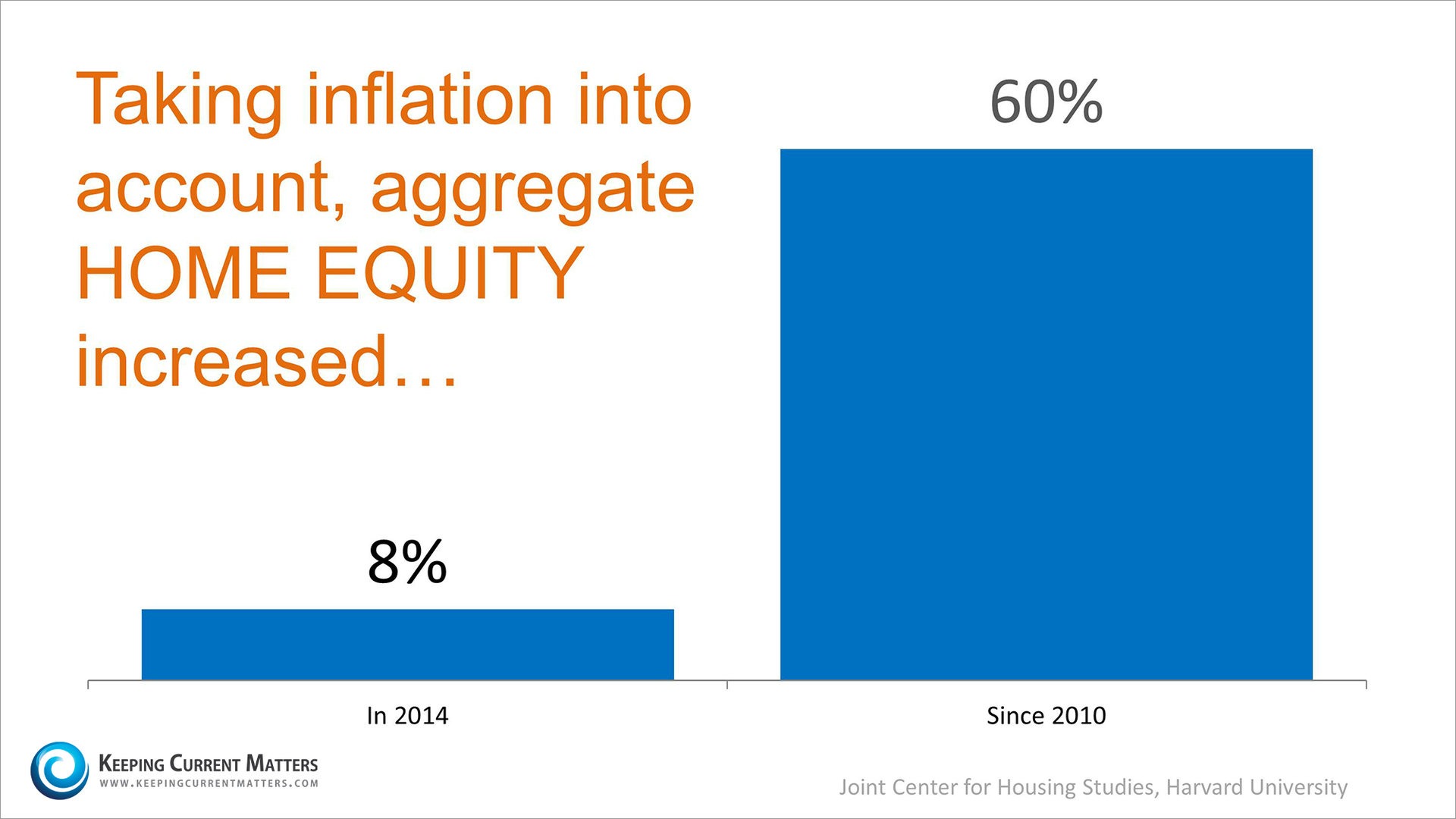
Family Wealth Grows as Home Equity Builds | Keeping Current Matters With residential real estate values rising quite substantially in most parts of the country over the last few years, many homeowners are seeing a major increase in their family’s wealth as equity continues to build in their house. A recent study by the Joint Center of Housing Studies at Harvard University revealed that home equity grew nicely last year and has grown dramatically over the last five years…Inflation & Home Equity | Keeping Current Matters Buyers looking today may not see the same build-up in equity but could still do quite well. Let’s assume you went into contract in the next six weeks and closed on a $250,000 home in January. If we take the house value projections from the last Home Price Expectation Survey, here is how your equity would grow over the next four years: Home Price Expectation Survey Equity | Keeping Current Matters
Bottom Line

Homeownership has historically been a great way for the average American family to build wealth over time.

Statistics About Low Inventory of Homes in Fall 2015

Existing Home Sales Slow Amongst Tight Inventory [INFOGRAPHIC] | Keeping Current Matters

Some Highlights:

  • Existing Home Sales slowed down slightly in August but remained 6.2% higher than August 2014.

  • Inventory levels remain below the 6 months necessary for a normal market at a 5.2-month supply.

  • First Time Buyers rebounded in August to make up 32% of sales, matching a 2015 high.

Home Loan Application

What you will need to have to make your home loan application

There are numerous home loans available today, including FHA, VA and Conventional.  All of these loans will require you to fill out a loan application.   This process is much easier if you are prepared.  Here is a list of required items you are going to need:

1.  Latest 2 paycheck stubs

2.  Last 2 years W-2’s or 1099’s

3.  If self-employed; last 2 years tax returns

4. Most recent bank statements  (all your accounts for 2 months)

5.  Loan and lease information on other real estate owned

6.  Drivers license or other form of ID

Your lender may want more information and if they do, they will ask for it.  Like the boy scouts, “Be prepared”, and you will have completed your loan application in no time!

Do You Really Think Your Landlord Pays for Repairs?

A recent article that appeared on Nasdaq.com addressed the issue of whether it is best to buy or rent in today’s real estate environment. The article was very fair in discussing both options.

“For some people, the choice is very clear: Buying a home can be more costly, given the cost of the purchase itself, plus taxes and insurance, plus maintenance and repairs.”

This argument is often made in defense of renting. However, we don’t believe it makes logical sense. They claim that, as a renter, you won’t have the expenses of “taxes and insurance, plus maintenance and repairs”. Do they really believe that the landlord pays all those expenses for their tenants?

The vast majority of landlords own rentable real estate as a form of investment. As any other investor would, they expect to make a return on that investment (ROI) – otherwise known as profit. In order to make a profit, the landlord needs to include EVERY expense they incur into the rent…AND THEN ADD A PROFIT MARGIN!!

We think it is incorrect to advise a prospective renter that they won’t have the same expenses that a homeowner would have. They just pay those expenses to a landlord with a “premium” built in.

What Does It Really Mean To Be “Represented” By A REALTOR®?


1.) Being Understood

Being Understood By Your Realtor or Real Estate AgentBeing “represented” by a REALTOR® means that you have an advocate who is putting themselves in your shoes. They will listen intently to you. They want as much information about your situation as possible so that they can best help you. They will do everything they can to earn your respect so that you will use them again in the future. Understanding our clients needs and wants is essential for success in this business.

We work hard to understand you and your needs. Each of my home buying and selling clients are different. Some may want to list their house for sale and need advice on staging and adding upgrades to get the best value. Others may be relocating due to military orders and need to find a house in the next 7 days. Everyone’s situation is different. They all require special attention to make sure that their needs are met and their expectations are exceeded. If your REALTOR® truly understands you and your situation, you are in good hands! Continue reading

8 Tips for First-time Home Buyers

first-time-home-buyers1.  Get pre-approved: Before you jump on the web or jump in your car to look at houses, have a talk with a lender or 2, remember, you are “shopping” for the best home loan you can get!  Find out how much house you can afford and what your interest rate will be.  Check out what your monthly payment will be at different interest rates and different down payments.  You want to be pre-approved and ready to buy the home of your dreams when you see it!

2.  Now that you know what you can afford, know what you want.  The home buying process can be stressful.  If you know what you want in a house and what you are willing to compromise on, the home buying experience will be far easier.

3.  Start researching:  Drive around, hit some Open Houses, go online, check out crime, walk scores and schools and narrow your search to 3 or 4 neighborhoods that you want to live in.

4.  Have a timeline: If you need to clean up your credit first, factor that in.  Plan to buy a house in 3 months or 6 months or whenever it is best based on your situation, and then set and stick to your timeline. Continue reading